

Alive
Leadership
Human Intelligence for an uncertain world
We’re building the world’s best assessment of the human skills leaders now need and the human systems they create for their teams.
2
Sides of Alive Leadership
6
Alive Leadership Skills
10
Alive System Conditions
Why Alive?
Leadership has changed. Your 360 should too.
As AI takes on more predictable and prescribed work, leaders inherit more uncertainty and more situations where the answer isn’t obvious and the playbook runs out.
Alive 360 was built for that work. It measures the Human Intelligence leaders now need by assessing the human skills they express and the human system they create for their team.
Because leadership under uncertainty is not just about the leader. Human skills require human systems.
WHY NOW
The world no longer stays still.
Organizations were built to reduce variation. That created reliability, efficiency, and scale. It also assumed the right response could be known in advance.
The terrain changes before the map can.
01
Technologies, markets, customer needs, and business models change faster than established systems can respond.
Judgment must move closer to the work.
02
People closest to customers, operations, and emerging problems need to recognize change and respond before certainty is available.
AI changes what organizations need from people.
03
As AI assumes more predictable and codifiable work, organizations depend more on judgment, relationship, and learning through uncertainty.
THE LEADERSHIP SHIFT
From Industrial Management to Alive Leadership
Structure and accountability remain essential. What changes is how information, judgment, decisions, and learning move through the organization.
| INDUSTRIAL MANAGEMENT | ALIVE LEADERSHIP |
|---|---|
| Judgment is concentrated | Judgment is distributed |
| Relevance is specified in advance | Relevance is continually discovered |
| Decisions travel upward | Decisions remain close to current information |
| People execute established plans | People sense, judge, learn, and act |
| Leaders provide direction and control | Leaders provide clarity and enable judgment |
HUMAN INTELLIGENCE
The map is no longer enough.
For most of our 300,000-year history, humans navigated uncertain environments by reading changing conditions, making consequential decisions with incomplete information, and moving forward together.
Modern work made us exceptionally good at reading and following established maps. As the world becomes uncertain again, leaders need the full range of their Human Intelligence back.
Human Intelligence is the capacity to draw on information from mind, body, other people, and the world to discern what matters and move forward with confidence, even when certainty is unavailable.
Read the map
Reasoning
Work with what is known through established knowledge, evidence, methods, and models.
-
Draw on relevant knowledge and experience, fill important gaps, and update what you know as conditions change.
-
Organize complex information, identify the most important patterns and relationships, and test whether conclusions are supported by the evidence.
Read the terrain
Judgment
Explore possibilities and move forward when the available maps cannot prescribe a clear answer.
-
Widen the frame and remain open long enough for non-obvious possibilities to emerge.
-
Make a decision under uncertainty and remain accountable for what follows.
Read the people
Relationship
Understand other people and build the trust needed to move through uncertainty together.
-
Perceive other people beyond assumptions and understand what matters to them.
-
Act with honesty and consistency so others can trust and coordinate with you.
THE ALIVE LEADERSHIP FRAMEWORK
Two sides of Alive Leadership.
01 · HUMAN SKILLS
Use the skills uncertainty requires.
Reason through what is known. Exercise judgment when no clear answer exists. Build the relationships that allow people to face uncertainty together.
02 · HUMAN SYSTEM
Create the conditions your team needs.
Shape the working environment so people can notice change, speak honestly, exercise judgment, learn from results, and take responsibility.
THE HUMAN SYSTEM
The system around a team shapes what people can do.
Ten conditions across Work Space, Work Day, and Work Culture shape how well people can use their Human Intelligence.
01
WORK SPACE
Where work happens

Form
Whether the team’s physical environment supports attention, comfort, and interaction.
Function
Whether people have the spaces, tools, and flexibility their work requires.
02
WORK DAY
How work happens

Feedback
Whether the leader helps people see and learn from the results of their actions.

Pace
Whether the leader sets a pace that leaves room to think, relate well, and recover.
Practice
Whether the leader gives people work that calls for real judgment and strong relationships.
03
WORK CULTURE
What work reinforces
Honesty
Whether people can speak openly and the leader receives difficult truths constructively.
Incentives
Whether what the leader measures, recognizes, and rewards reflects what matters.
Purpose
Whether the leader connects the team’s work to a purpose reflected in decisions.

Modeling
Whether the leader visibly practices the behaviors they expect from others.

Cultivation
Whether the leader selects, places, and develops people for the human skills their work requires.
ALIVE LEADERSHIP ASSESSMENT
See the human skills leaders use and the human system they create.
Alive 360 brings together feedback on the human skills a leader demonstrates and the working conditions their team experiences.
SAMPLE REPORT
Alive Leadership Profile
SKILLS + SYSTEM
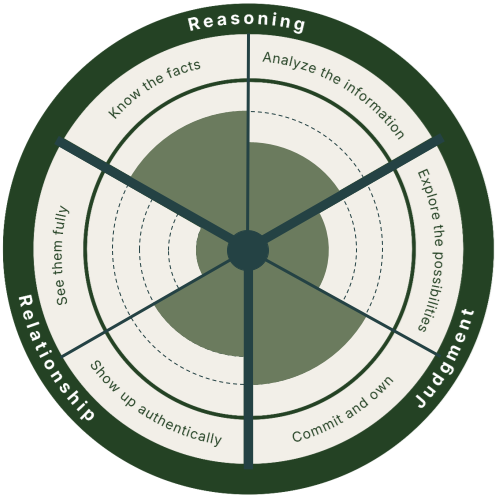
Alive Skills
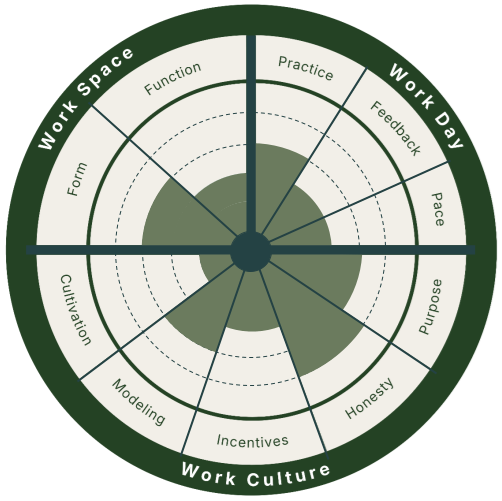
Alive System
RESULTS
This leader demonstrates strength in making and owning difficult decisions, while their team experiences weaker conditions for exercising judgment themselves.
The profile highlights feedback, pace, cultivation, and incentives as areas to examine more closely.
LEADING IN UNCERTAINTY
Experience Human Intelligence.
An experiential introduction to the Human Intelligence leaders now need. Explore how we learned to rely on maps, models, and prediction, what gets lost when we do, and what it takes to navigate when the path forward is uncertain.
RESEARCH FOUNDATION
Grounded in research. Built for precision.
The Alive Leadership Assessment combines more than a decade of research into Human Intelligence with assessment science to measure the skills leaders now need and the conditions they create for their teams.
Psychology and cognitive science
How people learn, reason, decide, attend, and adapt.
01
Neuroscience
How the brain integrates knowledge, bodily signals, social information, and the wider environment.
02
Anthropology and environmental research
03
How everyday environments shape attention, cognition, relationships, and human capability.
Assessment science
How capabilities and conditions are defined, measured, validated, and reported.
04
THE ALIVE INSTITUTE
A leadership assessment company focused on Human Intelligence.
We combine research on Human Intelligence with assessment science to build rigorous, practical ways of assessing the human skills leaders need and the human systems they create for their teams.
The name Alive reflects what leaders often describe when they regain access to these capabilities, feeling more able to navigate uncertainty and more alive in their work.
THE FOUNDER
James Meaden
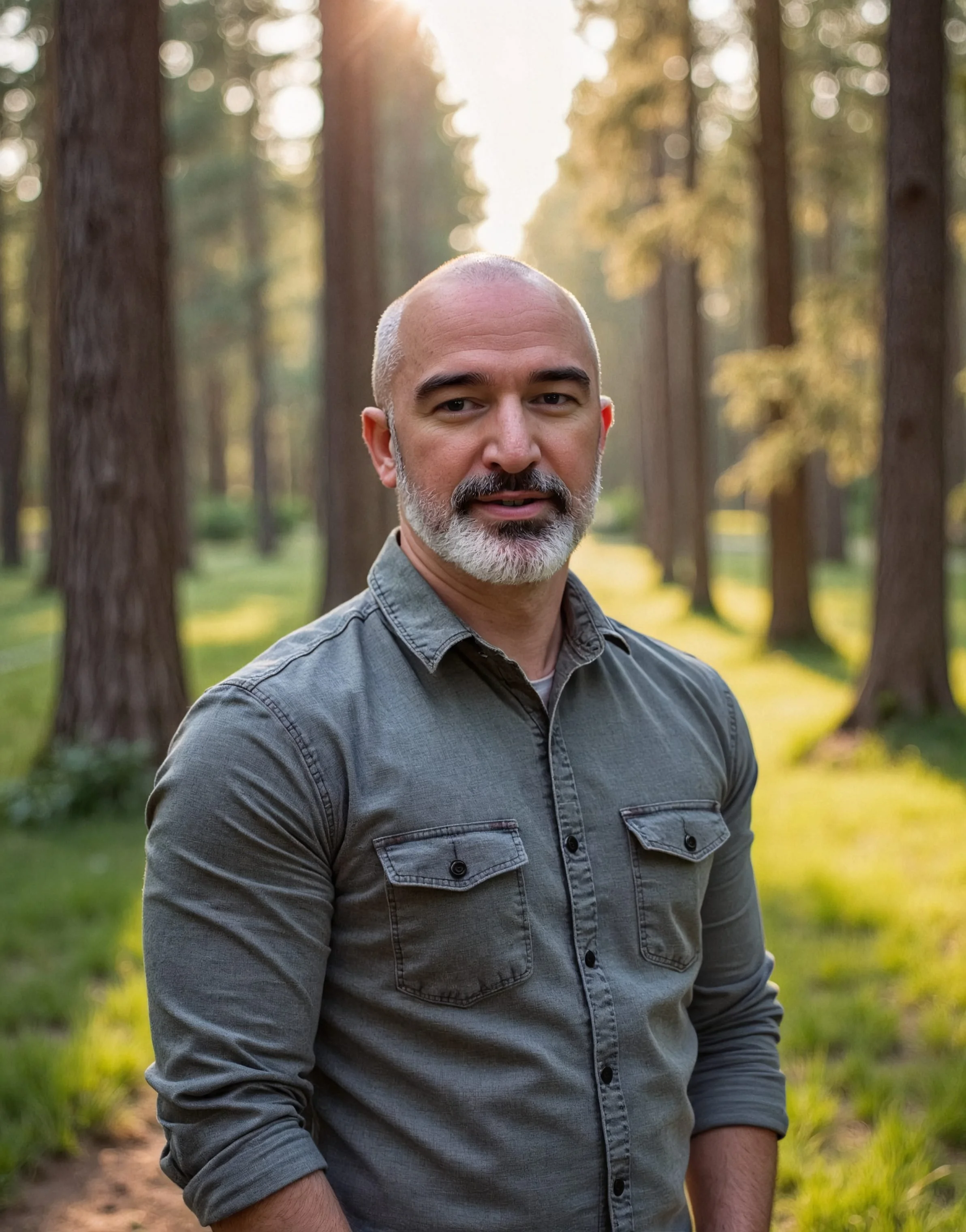
James is an Industrial/Organizational psychologist and researcher with more than 15 years of experience in talent assessment, including senior roles with Accenture, Codility, SHL, and Revolut. He led Codility’s Assessment Science R&D team, developing AI skills assessments and AI-powered scoring systems, and received the 2026 IPAC Innovation in Assessment Award.
His published research has explored how modern environments shape the way people think, perceive, and respond, including why we have become increasingly reliant on abstraction and mental models while becoming less connected to information from the body, other people, and the world around us. That work helped form the foundation for Alive’s Human Intelligence framework.
M.A. Industrial/Organizational Psychology · Published researcher · More than twenty peer-reviewed conference papers
THE QUESTION
What does uncertainty require from your leaders now?
See what the Alive Leadership Assessment reveals about the human skills leaders use and the human systems they create for their teams.